DNSC 6290: LLMs: Concepts and Applications

George Washington University | Department of Decision Sciences
DNSC 6290: LLMs: Concepts and Applications
Materials for a technical, nuts-and-bolts course on large language models, their applications, and their evaluation.
DNSC 6290: Course outline
- LLM and transformer foundations
- Prompting and prompt development
- Model APIs, structured outputs, and typed decisions
- Context engineering, memory, and state
- RAG and knowledge pipelines
- Tool use and agentic workflows
- TEVV for LLM applications
Corrections or suggestions? Please open an issue.
Preliminary materials
Lecture 1: LLM and transformer foundations
Tokens, embeddings, attention, transformers, generation; reasoning models and inference-time reasoning.
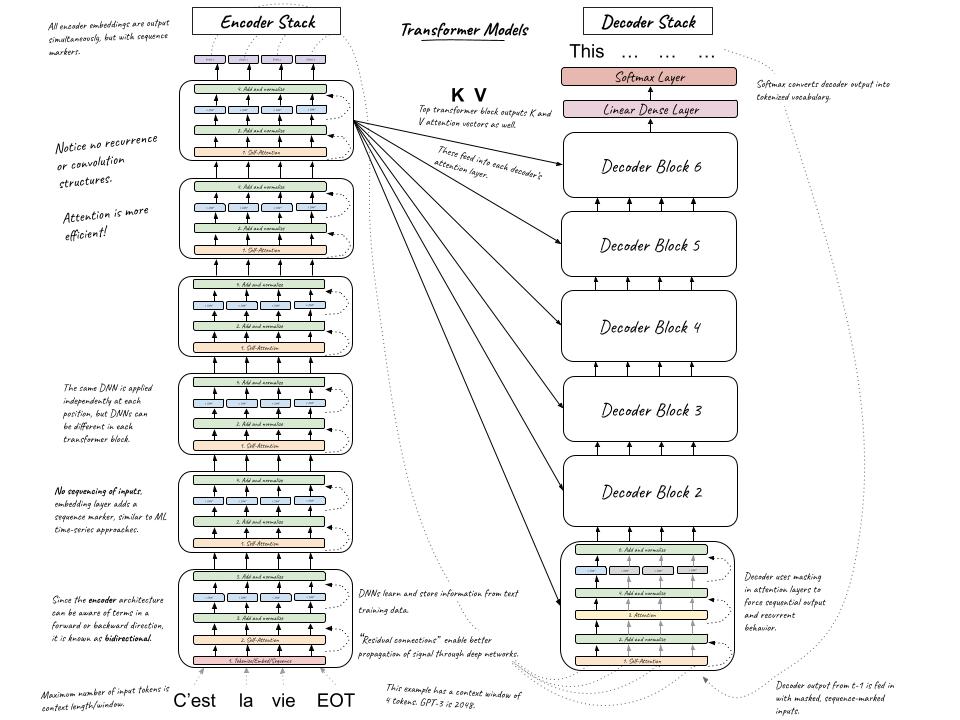
An encoder–decoder transformer stacks attention and feed-forward layers to produce token representations. Source: Lecture 1, Slide 11.
Lecture 1 class materials
- Lecture slides
- Software example: Predicting the next word
Lecture 2: Prompting and prompt development
Instructions, system prompts, examples/in-context learning, templates, task decomposition, and iterative refinement.
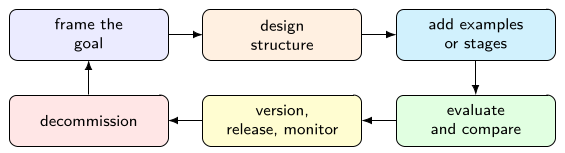
A prompt-development lifecycle moves from goal framing and design through examples, evaluation, release, monitoring, and decommissioning. Source: Lecture 2, Slide 17.
Lecture 2 class materials
- Lecture slides
- Software example: Practical prompt development
- Example goal prompt
Lecture 3: Model APIs, structured outputs, and typed decisions
Requests/responses, parameters, streaming, error handling; JSON schemas, Pydantic validation, and Jev-style typed decisions.
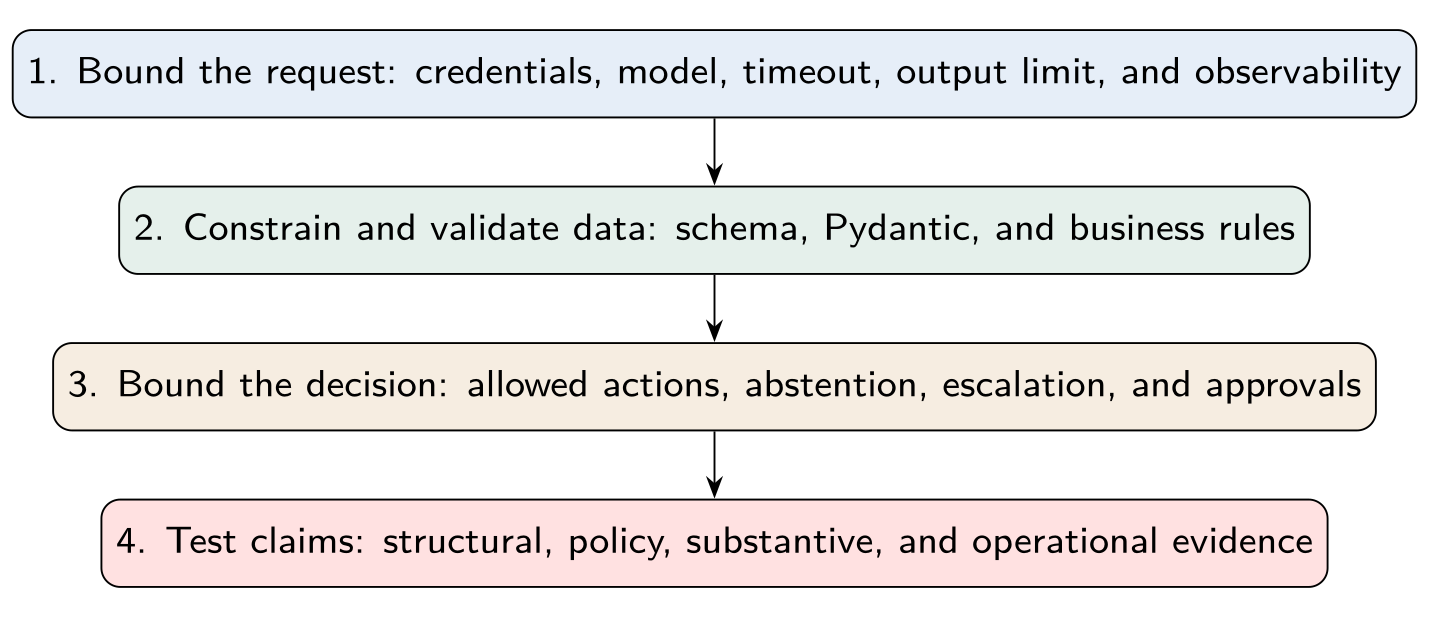
Four API controls bound requests, validate data, constrain decisions, and test claims. Source: Lecture 3, Slide 18.
Lecture 3 class materials
- Lecture slides
- Software example: Model APIs, structured outputs, and typed decisions
Lecture 4: Context engineering, memory, and state
Context assembly, windows and budgets, conversation history, persistent memory, and state management.
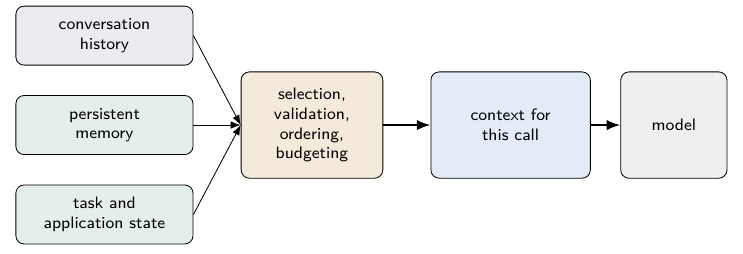
Conversation history, persistent memory, and application state are selected and budgeted into context for a model call. Source: Lecture 4, Slide 6.
Lecture 4 class materials
- Lecture slides
- Software example: Context engineering, memory, and state
Lecture 5: RAG and knowledge pipelines
Ingestion, chunking, retrieval embeddings, vector/hybrid search, reranking, grounded answers, and citations.
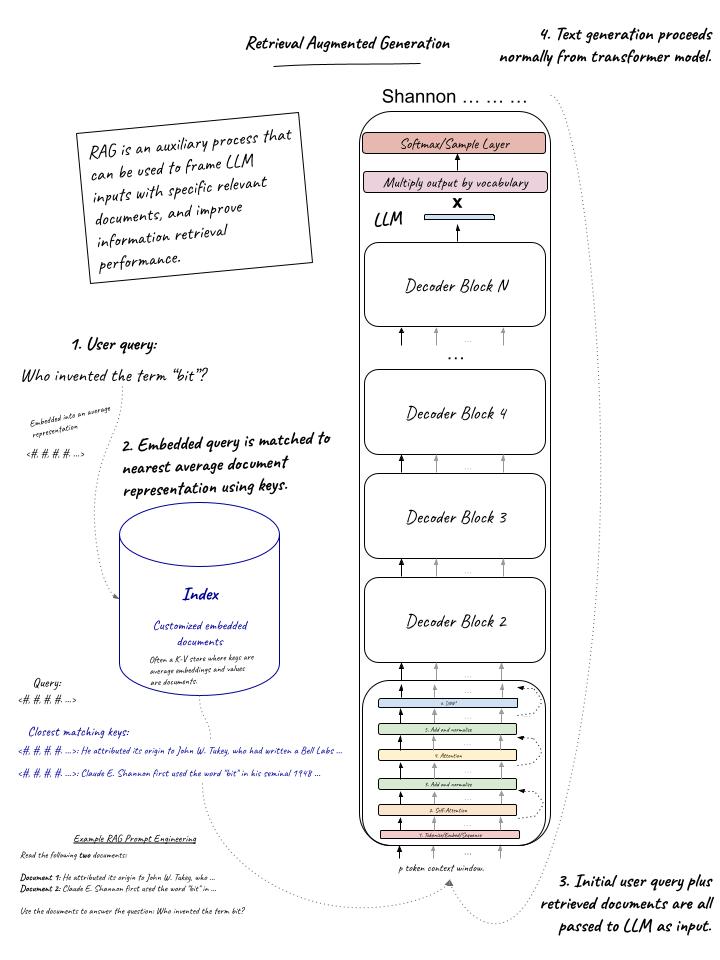
A query retrieves relevant documents that augment the model prompt and support a cited answer. Source: Lecture 5, Slide 14.
Lecture 5 class materials
- Lecture slides
- Software example: Cited RAG over NIST AI RMF actions
Lecture 6: Tool use and agentic workflows
Function calling, external connectivity, MCP, bounded agent loops, orchestration, and agent identity; Text2SQL as a worked example.
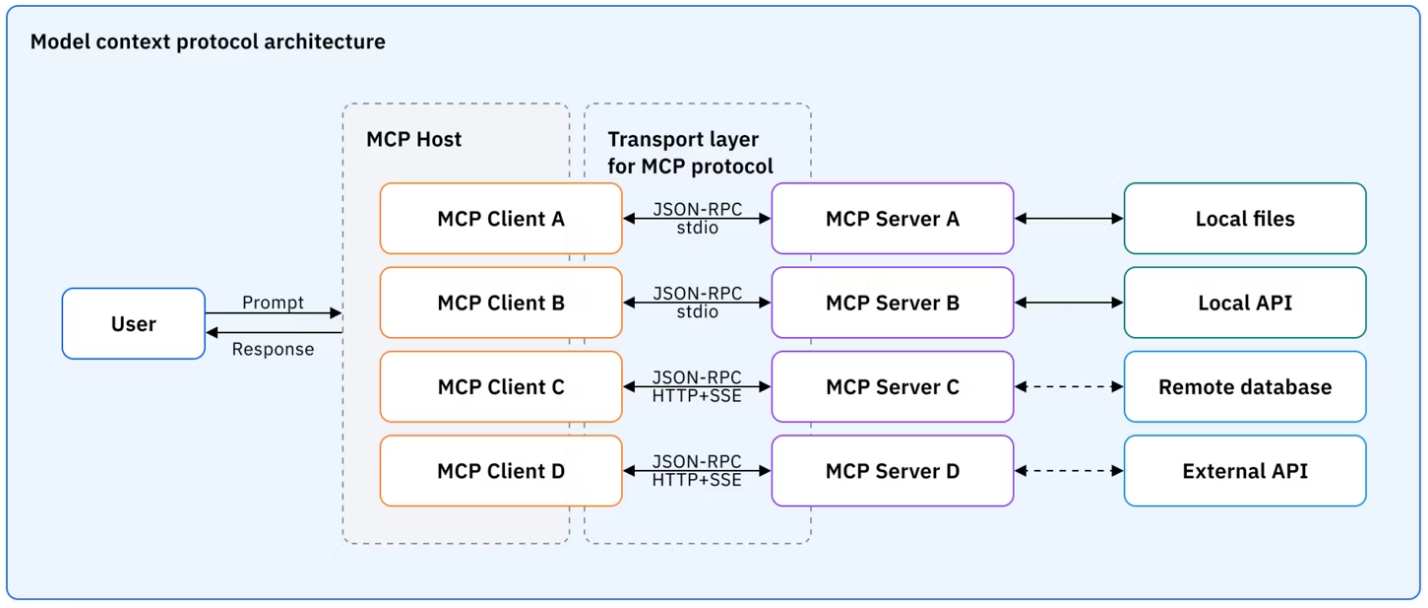
An MCP host connects clients to tool servers over local or remote transports. Source: Lecture 6, Slide 9, adapted from IBM (n.d.), What is Model Context Protocol?; transport labels follow the MCP (2025) Transports specification.
Lecture 6 class materials
- Lecture slides
- Software examples:
- Setup and server startup
Lecture 7: TEVV for LLM applications
Measurement science, benchmarks and their limitations, LLM judges, embedding- and classifier-based tests, red teaming, field testing, human review, and validation of AI measurement instruments.
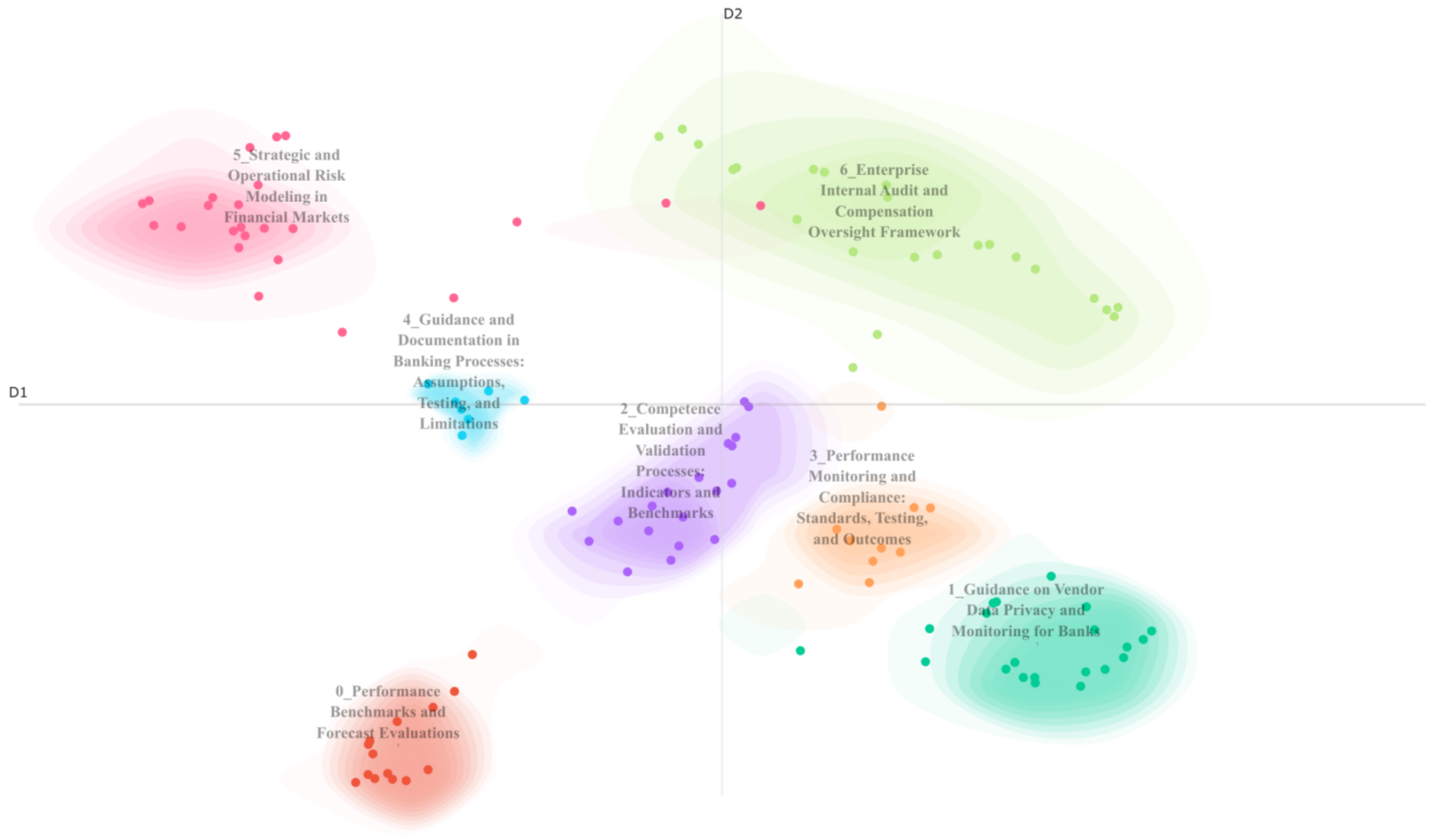
Benchmark cases and embedding diagnostics provide complementary evidence for model testing. Source: Lecture 7, Slide 7, Sudjianto et al. (2024), Human-Calibrated Automated Testing and Validation of Generative Language Models.
Lecture 7 class materials
- Lecture slides
- Software examples:
Software configuration
The notebooks use Python 3.13 and the repository’s locked uv environment.
From the repository root, run uv sync --locked to create or update .venv,
then select that project environment as the notebook kernel. Notebooks that use
the OpenAI API load OPENAI_API_KEY from the ignored, repository-root .env
file or prompt for it securely.
The project README covers installing uv and Python, selecting
the kernel in VS Code, and lecture-specific setup instructions.
This project is maintained by jphall663.